A Comprehensive Guide to Types of Hotel Rooms
Layouts, Standards, and Hospitality Equipment Strategies
Choosing and booking the right hotel room is one of the most critical aspects of trip planning for travelers, but for hoteliers, it is the foundation of revenue management and guest satisfaction. The design, layout, and categorization of hotel rooms directly impact the operational efficiency of the establishment and the overall quality of the guest experience. Rooms are not merely spaces with beds; they are carefully engineered environments classified by bed count, dimensions, interior functionality, and premium amenities.
For hospitality investors and managers, understanding the strict definitions of room categories is essential for optimizing floor plans, purchasing the right HoReCa equipment, and delivering on guest expectations. Whether you are establishing a boutique property or a luxury 5-star hotel, every square meter must be strategically designed to balance aesthetic appeal with functional durability. In this comprehensive industry guide, Mirzaee Group outlines the definitive classifications of hotel rooms, their technical specifications, and the equipment standards required to elevate them.
Standard Types of Hotel Rooms Based on Classifications and Layouts
The most common method of classifying hotel rooms is based on the number of intended occupants and the specific configuration of the bedding systems. Hoteliers must ensure that the room dimensions match international luxury standards to avoid a cramped atmosphere, keeping a strong focus on premium spacing and guest privacy.
Single Rooms (SOLO)
A single room is specifically engineered to accommodate a single traveler or business guest looking for efficiency and comfort. While designed for one person, the bedding setup can vary between a standard single bed or a premium double bed depending on the hotel’s grading.
The technical dimensions of a premium single room typically range between 37 and 45 square meters. To maximize this space, hoteliers should focus on ergonomic hospitality furniture and smart lighting layouts. Providing a dedicated working desk, high-durability luggage racks, and a compact yet premium minibar setup ensures that the solo corporate traveler has everything required for a seamless stay.
Twin Rooms (TWIN)
Twin rooms are characterized by having two separate single beds placed side by side, making them the ideal choice for corporate colleagues, friends, or small families traveling together. The standard dimensions for a luxury twin room generally fall between 32 and 40 square meters.
In a twin room, the spatial layout is critical. There must be an adequate, standardized distance between the two beds to ensure personal space and privacy for both guests. This layout requires dual bedside tables, individual reading lights, and shared hospitality furniture that does not restrict movement within the room.
Double Rooms (DOUBLE)
Designed specifically for two guests, the double room features one large bed—typically a double or queen-size mattress—intended for couples. The architectural footprint of a double room is usually optimized between 40 and 45 square meters to offer a balanced sense of space.
For double rooms, the emphasis shifts toward a more integrated, premium interior design. The placement of cozy seating arrangements, wide-angle wardrobe designs, and upscale guestroom accessories helps create an inviting, high-end atmosphere that enhances guest retention and justifies premium room rates.
Triple Rooms (TRIPLE)
Triple rooms are heavy-duty operational spaces designed to comfortably accommodate three separate guests simultaneously. To achieve this without compromising comfort, hotels typically utilize three distinct bedding configurations: three single beds, one double bed combined with one single bed, or two double beds.
Because of the higher occupancy, triple rooms require a larger spatial footprint, normally designed between 45 and 65 square meters. Hoteliers must ensure that the room’s air circulation, bathroom facilities, and storage capacities are scaled up to handle three guests without creating operational bottlenecks for the housekeeping staff.
Quad Rooms (QUAD)
Quad rooms are engineered for group travel, catering to four guests simultaneously. These rooms are highly popular among families and tour groups and are equipped with two or more beds, which can be a combination of double beds, queen beds, or bunk beds in specialized family resorts.
The dimension of a luxury quad room scales between 70 and 85 square meters. Due to the high foot traffic, the furniture, carpets, and wall coverings used in quad rooms must feature exceptional commercial-grade durability. Maximizing storage space and providing multi-functional seating are key design priorities here.
Premium and Scale-Based Room Categories
Beyond basic occupancy, luxury hotels differentiate their inventory by incorporating massive room scales, high-end architectural features, and separate living zones that replicate the feeling of high-end residential apartments.
Queen and King Rooms
Named after the dimensions of the beds they house, King and Queen rooms represent the standard of comfort in premium hotel properties. A Queen room features a queen-size mattress ($150 \text{ cm} \times 200 \text{ cm}$), while a King room boasts a massive king-size mattress ($180 \text{ cm} \times 200 \text{ cm}$ or larger).
These rooms generally range between 32 and 50 square meters. They are highly favored by international business travelers who demand superior sleep quality. The focus in these rooms is on premium mattress support systems, luxury linens, and wide-angle layouts that emphasize the bed as the centerpiece of the visual environment.
Hollywood Twin Rooms
The Hollywood Twin room is a specialized category highly common in modern international properties. It consists of two separate single beds that are physically joined together by a single, continuous wooden headboard or structural frame.
Spanning between 32 and 40 square meters, this configuration offers ultimate flexibility for hotel revenue managers. It can easily be dressed as a single massive bed for couples or kept distinct for two separate guests, allowing the hotel to adjust its inventory dynamically based on booking demands.
Double-Double Rooms
Double-Double rooms are premium, large-scale units designed to accommodate up to four guests using two double or queen-size beds. The architectural dimensions for this specific room type scale between 50 and 70 square meters.
These rooms are highly effective for luxury family tourism. Because of the dual large beds, the room requires a wide-angle layout to prevent the sleeping areas from overwhelming the space. High-end lighting systems and spacious vanity areas are mandatory to maintain a 5-star feel.
Studio Rooms
A Studio room is a compact, highly functional space featuring a specialized sofa that easily converts into a comfortable bed. Many luxury properties also include a standard permanent bed alongside the convertible furniture to offer flexible sleeping options.
Measuring between 25 and 40 square meters, the studio room replicates the workflow of a modern mini-apartment. It is an exceptional choice for extended-stay guests who require a multi-functional environment where they can work, sleep, and relax within a streamlined, well-engineered footprint.
Elite Architectural Suites and Long-Stay Formats
At the pinnacle of the hospitality industry are elite suites and long-stay apartments, designed to attract high-net-worth individuals, diplomats, and families seeking uncompromising luxury and extended operational facilities.
Luxury Suites
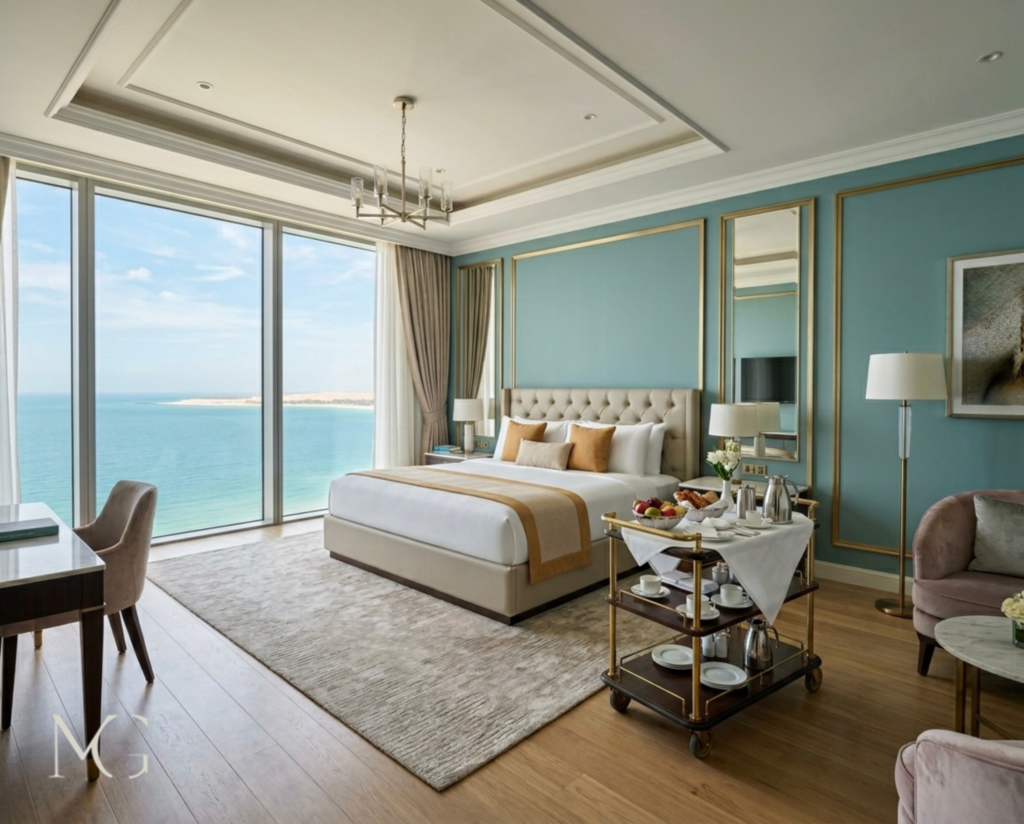
The defining characteristic of a professional hotel suite is the complete structural separation between the sleeping quarters and the living/dining areas. Standard luxury suites range between 70 and 100 square meters, featuring at least one independent bedroom and a spacious, dedicated living area.
Suites require top-tier HoReCa equipment, including premium hospitality carts, state-of-the-art espresso stations, and advanced climate control zones. The furniture layout must be expansive, ensuring that guests can host private meetings or dine in their rooms with complete privacy and comfort.
Penthouse Suites
Penthouse suites represent the ultimate expression of hospitality luxury, typically occupying the entire top floor of the hotel property. These ultra-premium spaces offer panoramic viewscapes, private key-card elevator access, and massive architectural layouts.
Equipping a penthouse suite involves custom, high-end hospitality installations. From private bar setups to bespoke open-air terrace furniture, every element must reflect a five-star, elite aesthetic that justifies its position as the property’s most expensive and exclusive inventory asset.
Extended-Stay Hotel Apartments
Designed for long-term guests, corporate relocations, and large families, hotel apartments bridge the gap between traditional hospitality and residential living. These units feature massive dimensions ranging from 95 to 250 square meters.
The key operational differentiator for hotel apartments is the inclusion of full-scale residential amenities, including a fully equipped kitchen, cooking appliances, laundry machines, and extensive storage solutions. The selection of materials here must balance home-like warmth with industrial-grade durability.
Connecting Rooms
Connecting rooms consist of two independent hotel rooms placed side by side, each featuring its own main hallway entrance, but joined internally by a private, lockable connecting door. The combined size of these spaces typically averages between 30 and 50 square meters per room.
This layout is highly sought after by families traveling with children, allowing seamless movement between the two rooms without entering the public hotel corridor. Hoteliers must install high-decibel acoustic insulation on the connecting doors to guarantee absolute soundproofing when the rooms are booked by separate, unrelated parties.
The Strategic Importance of Premium Sourcing in Room Equipping
The quality of a hotel room is ultimately judged by the touchpoints your guests interact with daily. The durability of the furniture, the smooth operation of the room accessories, and the technical layout of the space dictate whether a guest gives a five-star review or looks elsewhere for their next stay.
When equipping a modern hotel, reliance on premium manufacturing hubs—particularly the highly resilient and architecturally advanced production lines of Turkey—ensures that your properties stand the test of time. Sourcing commercial-grade hospitality equipment that focuses heavily on technical performance, high-capacity durability, and premium material composition allows hoteliers to minimize long-term maintenance costs while maximizing guest satisfaction.
About Mirzaee Group
As a premier leader in the international hospitality supply sector, Mirzaee Group brings over a decade of brilliant, verified experience to the fields of consulting, designing, and completely equipping luxury hotels, premium restaurants, and high-capacity commercial halls. We act as your strategic B2B partner, translating complex architectural requirements into highly functional, operational realities.
By utilizing our deep industry expertise and establishing direct supply chains with top-tier global manufacturing hubs, we provide comprehensive HoReCa solutions tailored to elevate the status of your property. From custom guestroom installations to massive industrial kitchen integrations, Mirzaee Group ensures your business operations perform at the highest global standards.