The Story of Coffee: From Farm to Cup
Coffee is one of the world’s most popular beverages, not only as a daily drink but also as a core part of culture and modern lifestyle. From its discovery in Africa to the rise of contemporary coffee shops, coffee has traveled a long and fascinating journey.
Today, understanding coffee types, coffee beans, and using the right coffee shop equipment plays a crucial role in achieving a high-quality final cup.
The History of Coffee: From Ethiopia to the World
Coffee was first discovered in Ethiopia and gradually spread to Yemen, the Middle East, and then Europe. Along this journey, coffee became one of the most important social beverages, and coffeehouses turned into central meeting points for people.
In the Middle East, Turkish coffee gained a special place in culture. Even today, it is served in a traditional and unique way, sometimes using sand coffee machines that create an authentic brewing experience.
Types of Coffee Beans
One of the most important factors affecting coffee flavor is the type of bean used. Generally, coffee beans are divided into three main categories:
Arabica
Arabica is the most popular coffee bean in the world. It has a smooth taste, balanced acidity, and a strong aroma. Most specialty cafés rely heavily on this variety.
Robusta
Robusta contains higher caffeine levels and has a stronger, more bitter taste. It is often blended with Arabica and is widely used for espresso due to its strong body and crema.
Liberica
A rarer and more unique type of coffee bean with a bold and distinctive flavor profile, used in select regions.
Blending these beans creates a wide variety of flavor profiles. The final result also heavily depends on using a professional industrial coffee grinder for consistent extraction quality.
Types of Coffee and Brewing Methods
Coffee comes in many forms depending on the brewing method:
Espresso
The foundation of many coffee drinks, prepared under high pressure using an industrial espresso machine. It delivers a rich and concentrated shot.
Cappuccino & Latte
Popular café beverages made by combining espresso with steamed milk and milk foam.
Turkish Coffee
Prepared using ultra-fine ground coffee for a strong and rich taste. Traditional sand coffee machines are often used to create a unique brewing style.
Drip Coffee
Made by passing hot water through ground coffee, resulting in a smooth and mild flavor. It is prepared using drip coffee machines.
French Press
A simple manual brewing method that produces a full-bodied and rich coffee experience.
Cold Brew
Prepared with cold water over a long steeping time, resulting in lower acidity and a smoother taste.
From Farm to Cup: The Coffee Journey
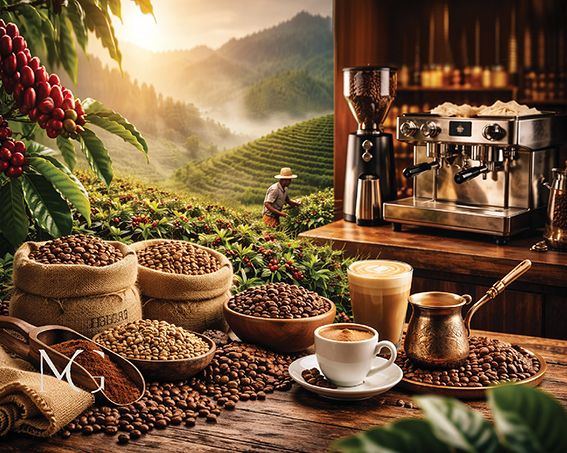
Coffee begins its life on farms, where coffee cherries are carefully grown, harvested, and processed. After harvesting, beans are dried, roasted, and ground before reaching cafés around the world.
This journey — from coffee farms to your cup — is what gives coffee its unique identity, flavor, and cultural value. Every stage, from cultivation to roasting, directly affects the final taste.
Coffee Culture Around the World
Coffee is consumed differently across countries:
• Turkey & Iran: Traditional Turkish-style coffee
• Italy: Quick, strong espresso culture
• France: Light and balanced brewed coffee
• United States: Wide variety from lattes to cold brews
• Arab countries: Coffee as a symbol of hospitality
These differences have made the global coffee industry highly diverse and dynamic.
The Role of Equipment in Professional Coffee Making
High-quality coffee is not only about good beans; equipment plays a decisive role in consistency and taste.
Professional cafés rely on commercial coffee shop equipment, including:
• Industrial espresso machines
• Industrial coffee grinders
• Drip coffee machines
• Sand coffee machines
• Industrial blenders
• Hot and cold bar equipment
Using professional-grade equipment ensures consistent quality, faster service, and a reliable customer experience.
Opening a Coffee Shop in Dubai & the UAE
If you are planning to start a coffee shop in Dubai or anywhere in the UAE, having a complete café equipment list is essential.
When purchasing café equipment, key factors include quality, durability, and cost efficiency. Choosing the right equipment directly impacts service speed, beverage quality, and customer satisfaction.
In competitive markets like Dubai, many businesses search for:
• coffee shop equipment in Dubai
• café equipment suppliers in UAE
• hotel and restaurant equipment Dubai
to build or upgrade professional coffee businesses.
The Future of Coffee and Café Equipment
With rapid technological advancement, coffee equipment is becoming smarter and more automated. Modern machines help baristas prepare high-quality drinks faster and more consistently.
At the same time, traditional brewing methods like Turkish coffee and sand coffee machines remain popular due to their cultural and experiential value.
Conclusion
Coffee is a combination of history, culture, and science. Understanding coffee bean types, brewing methods, and using the right café equipment is the key to delivering a high-quality coffee experience.
From farm to cup, every step plays a vital role in creating a memorable journey.
Professional Coffee Equipment Supply
Mirzaee Hotel Equipment Group is a specialized supplier of hotel, restaurant, and café equipment, offering a complete range of coffee-related machines including industrial espresso machines, coffee grinders, drip coffee machines, sand coffee machines, and other commercial café equipment.
Focused on quality, competitive pricing, and imported café solutions, the company is a reliable partner for entrepreneurs looking to start or upgrade their coffee business in Dubai and the wider UAE market.